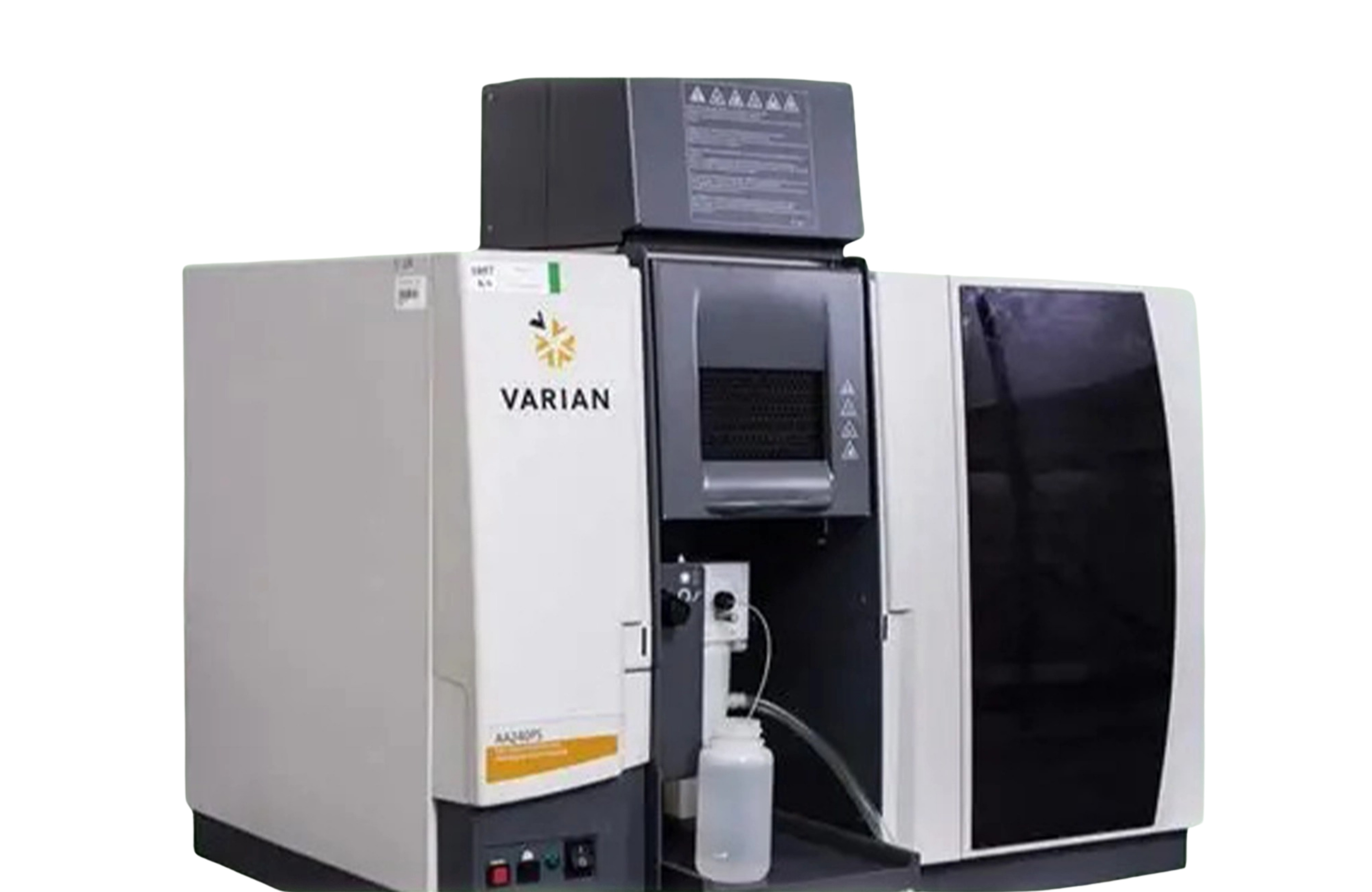
_20251023_180409.jpg)
Atomic Absorption Spectroscopy (AAS)
What Is Atomic Absorption Spectroscopy and How Does It Function?
- Atomic Absorption Spectroscopy (AAS) is an analytical technique used to determine the concentration of specific metal elements in a wide range of sample types.
- It operates by measuring the absorption of light by free atoms in the gaseous state.
- Each
element absorbs light at a characteristic wavelength, enabling precise
identification and quantification.
"Discover the Industries Benefiting from AAS Technology "
Trusted across pharmaceutical, nutraceutical, environmental, and food industries, Atomic Absorption Spectroscopy (AAS) provides reliable trace metal detection in everything from raw materials and finished products to water, soil, air, and dietary supplements.
Why Choose Atomic Absorption
Spectroscopy (AAS)?
Highly Sensitive &
Element-Specific
Detects trace metals at parts per million (ppm) to parts per billion (ppb)
levels, precisely measuring over 70 elements with minimal interference.
Broad & Accurate Detection
Range
Accurately analyzes a wide range of concentrations, delivering reliable and
reproducible results.
Efficient & Cost-Effective
Offers fast turnaround times and economical operation, ideal for routine,
high-volume testing.
Versatile Sample Compatibility
Works seamlessly with solids, liquids, and digested samples, supporting diverse
industry needs
Related Tests