_20251022_152513.png)
Inductively Coupled Plasma Mass Spectrometry (ICP‑MS)
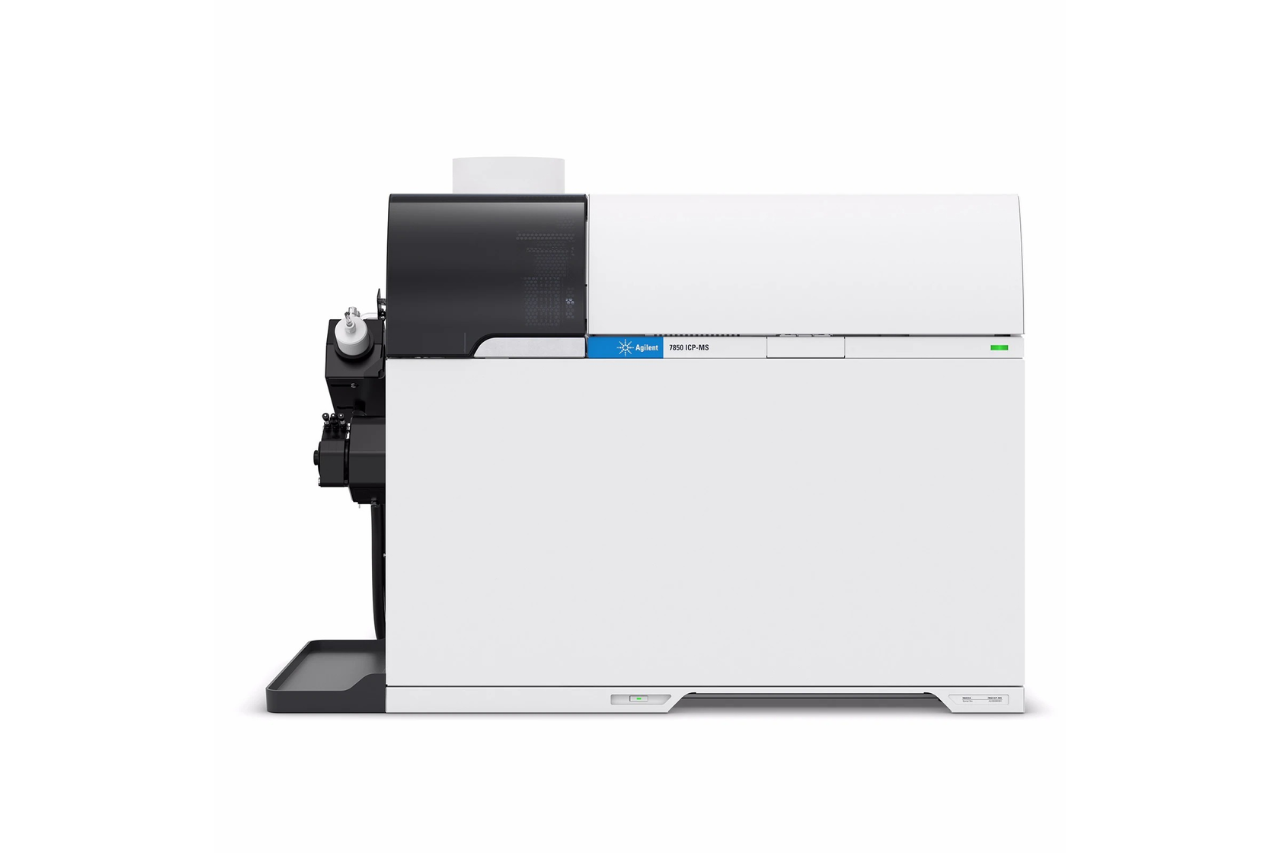
Inductively Coupled Plasma Mass Spectrometry (ICP‑MS) is a state‑of‑the‑art analytical technique that detects and quantifies trace elements with exceptional sensitivity and precision. ICP‑MS offers ultra‑low detection limits, broad multi‑element capability, and high repeatability making it the go‑to method globally for trace metal analysis, environmental safety, pharmaceutical quality, and advanced research.
ICP‑MS works by introducing a liquid (or digested) sample into a high‑temperature argon plasma. The plasma atomizes and ionizes the elements. The resulting ions are then filtered by their mass‑to‑charge ratios using a mass spectrometer, allowing each element (and often its isotopes) to be separately identified and quantified even at concentrations as low as parts per billion or parts per trillion.
ICP‑MS can accurately detect and measure a wide range of substances and applications, including:
- Heavy
metals and trace elements in water, soil, sediments
- Inorganic
impurities in pharmaceuticals and supplements
- Clinical/toxicological
analysis (blood, urine, tissues) for metal exposure or poisoning
- Environmental
contaminants (arsenic, lead, cadmium, etc.) in food, water, air
- Geological,
metallurgical, and material science applications: ores, alloys, minerals
- Isotopic analysis for tracing sources, dating, or fingerprinting materials
why choose ICP-MS ?
-
Ultra‑low detection limits
ICP‑MS can detect elements at extremely low concentrations (ppt = parts per trillion, or lower) things that many other techniques can’t pick up reliably.Isotopic analysis capability
ICP‑MS isn’t just about detecting elements it often allows you to look at different isotopes of an element. This has strong uses in fields like geochemistry, forensics, environmental tracing, etc.Wide dynamic range
It can accurately measure very low to fairly high concentrations in the same sample without giving up accuracy. Great for samples with trace contaminants as well as bulk elements.
Related Tests